How to build a bee
Three body parts, six legs, four wings, five eyes and a coat of branched hairs that turns out to be the whole point.
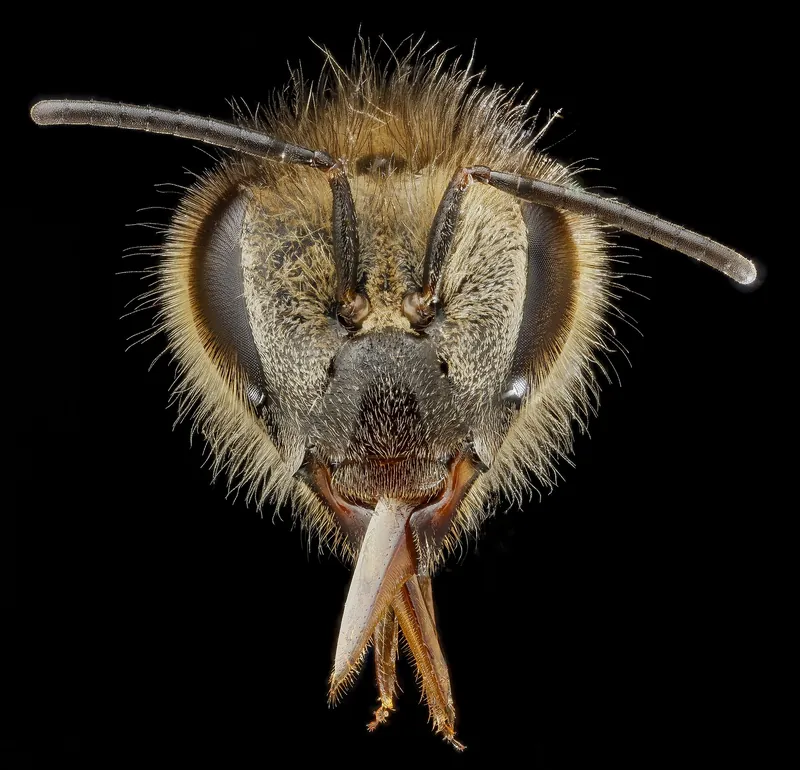
Hairs: the thing that makes a bee a bee
Bees differ from wasps by having branched, plume-like hairs, which pick up pollen. Wikipedia Unlike their wasp and ant relatives, which eat meat, bees are plant-eaters: they live on nectar and pollen. Wikipedia The ancestors of bees were predatory wasps that hunted other insects. Wikipedia
A bumblebee's thick pile of hairs insulates it; bumblebees from cold places have longer hairs than tropical ones. Wikipedia
Eyes
Bees have two large compound eyes and three small simple eyes (ocelli) on top of the head. Wikipedia Bumblebees have five eyes: two big compound eyes and three small simple eyes on top. BBCT
Bees can see ultraviolet patterns on flowers that we cannot. Wikipedia Bumblebees can also detect the electric fields of flowers. Wikipedia
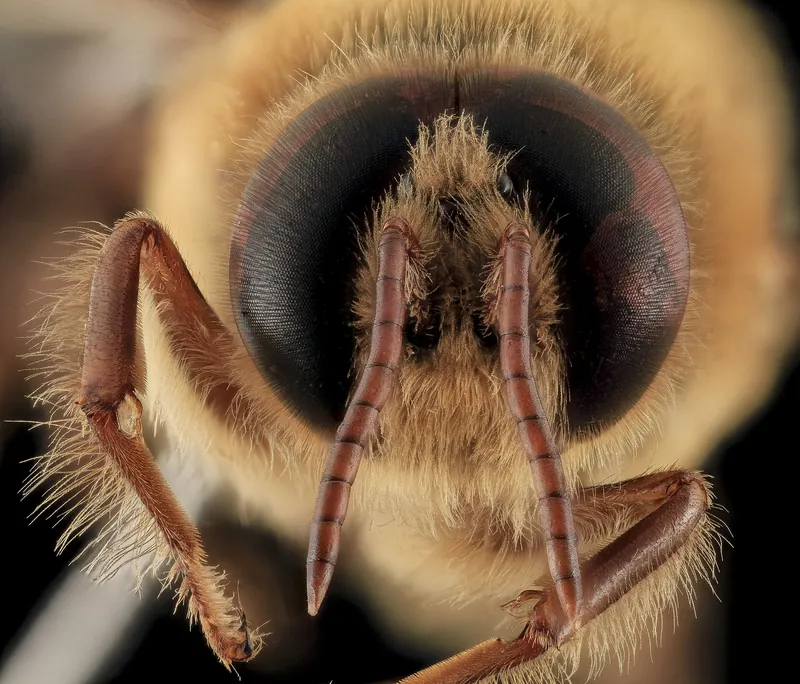
Honey bee drones have eyes twice the size of workers' and queens', which helps them spot queens when mating in flight. Wikipedia
Wings and flight
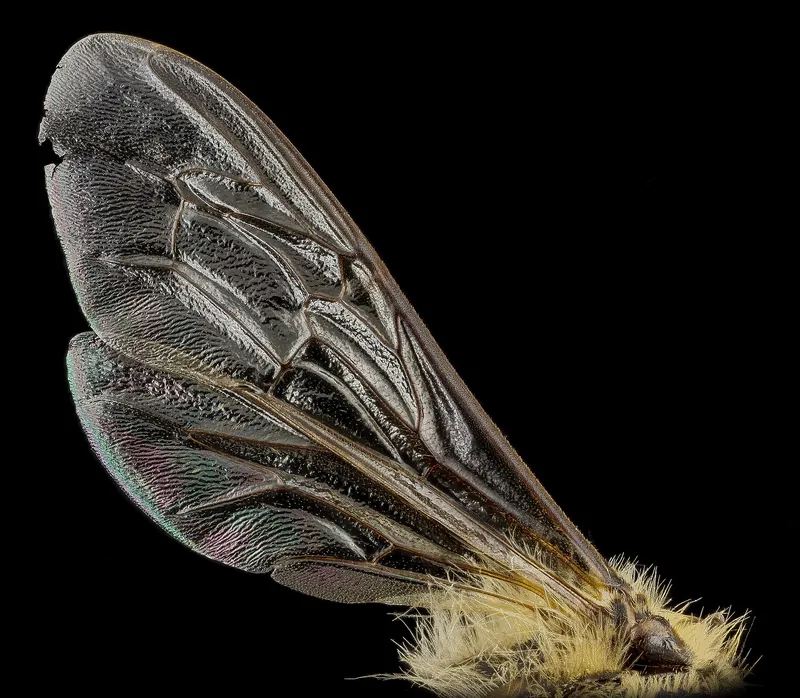
Bees have four wings. The smaller hind wings hook onto the forewings with a row of tiny hooks, so they beat as one. Wikipedia
Bumblebee wings can beat up to 240 times a second. BBCT A honey bee flaps its wings between 200 and 230 times a second when flying. BBC
A bumblebee's flight muscles must be at least 30 °C before it can fly. It warms up by shivering. Wikipedia
Legs, pollen and tongues
The front legs of bees carry little combs for cleaning their antennae. Wikipedia Honeybees and bumblebees carry pollen in pollen baskets (corbiculae) on their hind legs, flattened areas fringed with curved hairs. Wikipedia Most bee species carry pollen on brushes of hairs (scopae) on their hind legs or under their abdomens. Wikipedia
Bumblebee tongues vary from about 6 mm to over 20 mm. Long-tongued species like the garden bumblebee prefer deep tubular flowers such as foxgloves. BBCT
Bumblebees leave a "smelly footprint" on flowers, so other bumblebees can tell a flower has just been emptied. BBCT
Wax
Worker honey bees make wax from eight glands on the underside of the abdomen. Wikipedia Wax comes out as small clear scales; the workers chew it to build comb. Wikipedia
The sting
The last three segments of a female bee's abdomen are modified into the sting. Wikipedia Male bees cannot sting; only females can. BBCT Only honey bee workers have barbed stings, and queens' stings are smooth. Wikipedia
See stings: basic safety for what to do if one gets you.