Why everyone’s so keen on bees
Bees don’t pollinate to help us. They’re after food. But the side effect feeds the world.
What’s pollination?
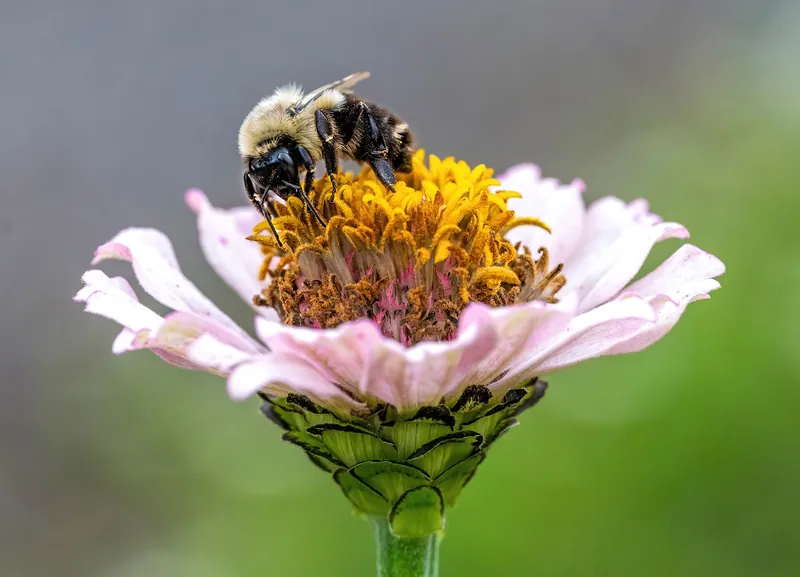
Flowers need pollen moved from one flower to another of the same kind to make seeds and fruit. Bees do it by accident while collecting food. Unlike their wasp and ant relatives, which eat meat, bees are plant-eaters: they live on nectar and pollen. Wikipedia Bees differ from wasps by having branched, plume-like hairs, which pick up pollen. Wikipedia
Many bees show "flower constancy", sticking to one kind of flower per trip, which helps carry the right pollen to the right plant. Wikipedia You can try this in our Flower Constancy game.
How much depends on it?
About 75% of the world's food crop types depend at least partly on pollinators. FAO Pollinators contribute to about 35% of global crop production by volume. FAO Pollinators boost the yield of 87 of the 115 major food crops. FAO
Over 80% of wild flowering plant species are pollinated by animals, mostly insects. FAO FAO counts over 25,000 bee species among the world's pollinators. FAO
Pollination by native bees is estimated to be worth about $3 billion a year in the United States. Xerces Society
Specialists
Bumblebees can buzz-pollinate, shaking pollen loose from flowers like tomatoes by vibrating their flight muscles. Wikipedia Buzz pollination can increase the amount and flavour of fruit on plants such as tomatoes. BBCT
A single blue orchard bee female may make nearly 60,000 blossom visits in her life. Wikipedia
Some orchids are pollinated only by male orchid bees, which collect perfumes from them. Wikipedia