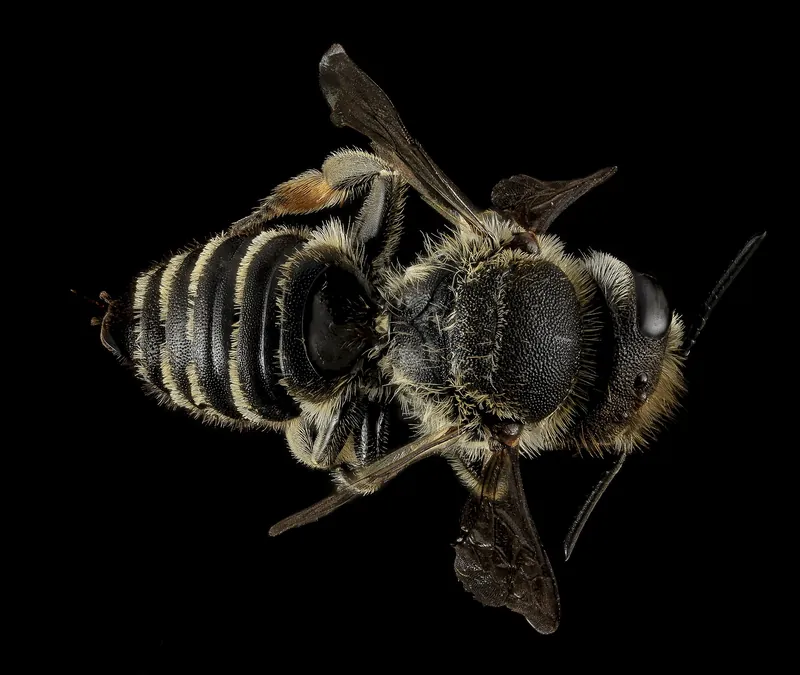
Egg, larva, pupa, bee
Three very different ways to run a life: the honey bee’s permanent city, the bumblebee’s one-summer family and the solitary bee’s year mostly spent underground.
Honey bees: three castes
A honey bee colony usually has one queen, up to a few thousand male drones in season, and tens of thousands of female workers. Wikipedia
Queen
All larvae start on royal jelly made by workers; a larva fed only on royal jelly becomes a queen. Wikipedia
Young queens fly to a drone congregation area and mate with several drones, which die in the act. Wikipedia A mated honey bee queen may lay up to 2,000 eggs a day. Wikipedia
Workers
All female. Young workers clean the hive and feed larvae, then build comb, receive nectar and guard the entrance, and finally become foragers. Wikipedia
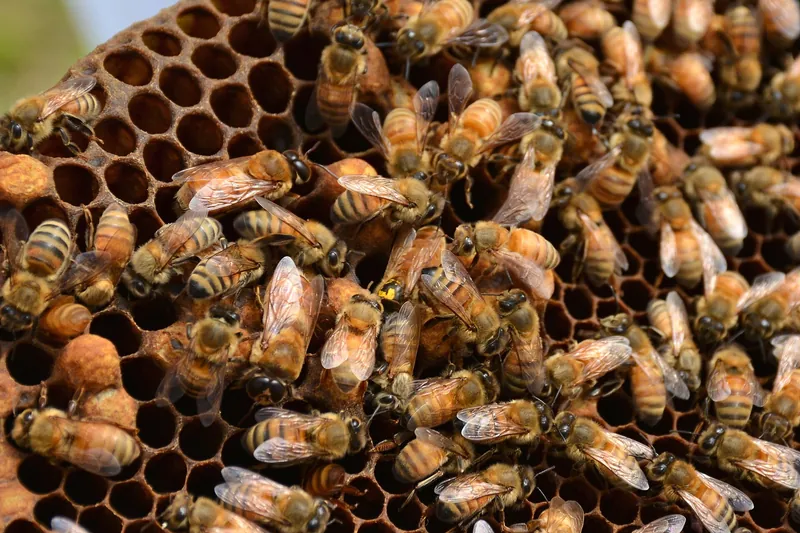
A honey bee queen can live three to four years, while a bumblebee queen lives about a year. BBCT
Bumblebees: a family that lasts one summer
- Spring. In spring the queen makes wax from her own body, shapes it into a nectar pot, and lays her first eggs, which hatch into female workers. BBCT
- A few days later. After four to six days the eggs hatch into white, C-shaped larvae. BBCT The queen keeps the nest at a constant 25 to 32 °C by shivering her flight muscles. BBCT
- Summer. Bumblebee workers only live about four to six weeks. BBCT Bumblebee colonies are much smaller than honey bee colonies, some with as few as 50 bees. Wikipedia
- Late summer and winter. New queens mate in late summer and hibernate over winter; all the other bumblebees in the nest die. BBCT
Solitary bees: a year mostly in the dark
Many solitary bees spend about 11 months as eggs, larvae and pupae in the nest; the flying adult stage lasts only about three to six weeks. Xerces Society
Mason bees nest in holes and hollow stems and build mud walls between their cells. Wikipedia Leafcutter bees line their nests with neat pieces they cut from leaves. Wikipedia