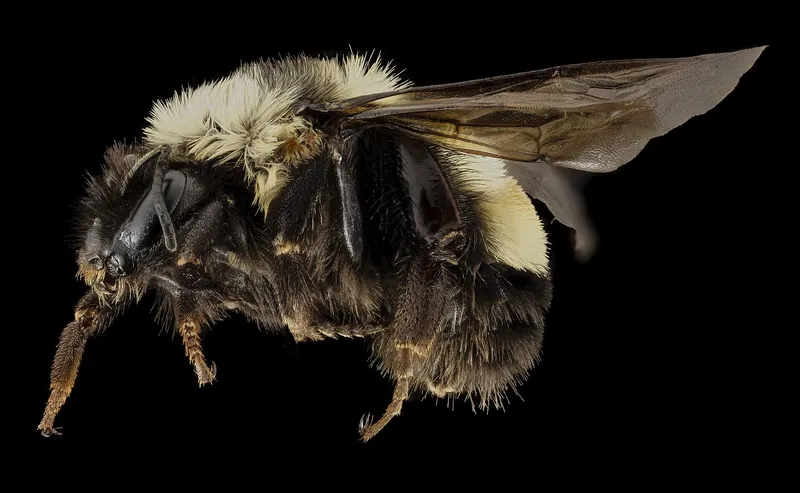
Big, furry and slightly warm
Bumblebees are the teddy bears of the bee world, and they run on very different rules from honeybees.
How many?
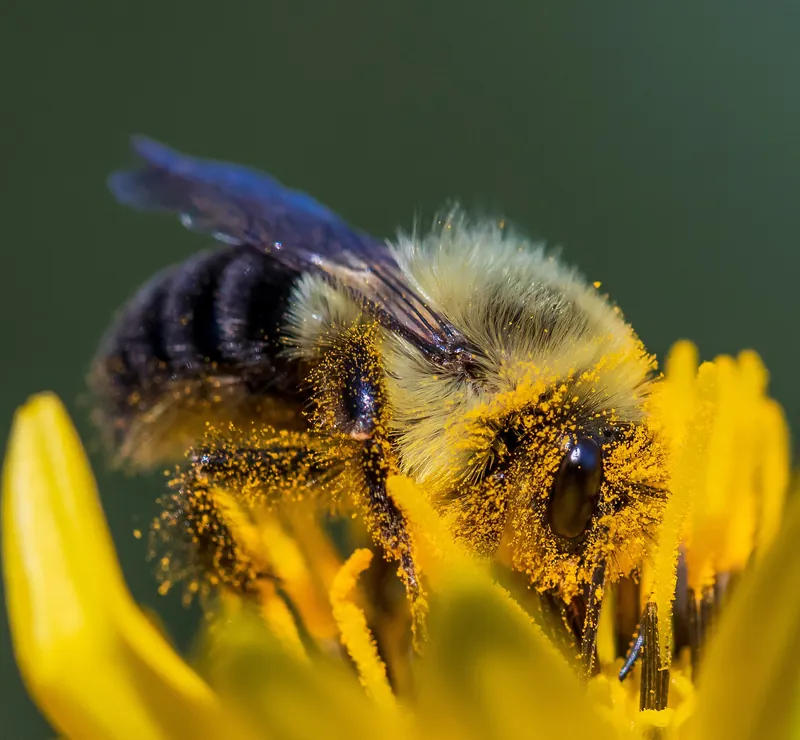
There are over 250 species of bumblebee (genus Bombus), mostly in the Northern Hemisphere, with some in South America. Wikipedia The UK has 24 species of bumblebee. Natural History Museum There are about 45 bumble bee species in the United States. Xerces Society
European bumblebees have been introduced to New Zealand and Tasmania. Wikipedia Charles Darwin called them "humble-bees" in On the Origin of Species. Wikipedia
No honey, no hive
Bumblebees don't make honey: they don't need to store food for winter, because only the new queens survive it, hibernating. BBCT
Bumblebees don't live in hives. Some nest underground in old mouse holes, under sheds or in compost heaps; others in thick grass, bird boxes or lofts. BBCT Bumblebee colonies are much smaller than honey bee colonies, some with as few as 50 bees. Wikipedia
See the bumblebee year on life cycles.
Built for cold mornings
A bumblebee's flight muscles must be at least 30 °C before it can fly. It warms up by shivering. Wikipedia A bumblebee's thick pile of hairs insulates it; bumblebees from cold places have longer hairs than tropical ones. Wikipedia
Bumblebee wings can beat up to 240 times a second. BBCT A bumblebee can travel up to 6 km in a day looking for flowers. BBCT
The idea that science says bumblebees "shouldn't be able to fly" is 20th-century folklore based on an over-simple calculation. Wikipedia
Senses and smarts
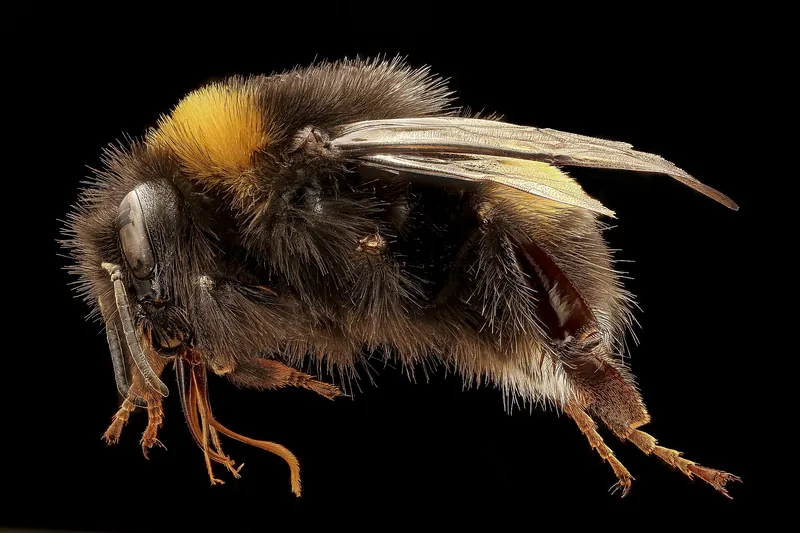
Bumblebees have five eyes: two big compound eyes and three small simple eyes on top. BBCT Bumblebees can also detect the electric fields of flowers. Wikipedia Bumblebees leave a "smelly footprint" on flowers, so other bumblebees can tell a flower has just been emptied. BBCT
Buzz pollination
Bumblebees can buzz-pollinate, shaking pollen loose from flowers like tomatoes by vibrating their flight muscles. Wikipedia Buzz pollination can increase the amount and flavour of fruit on plants such as tomatoes. BBCT
Tongues and flowers
Bumblebee tongues vary from about 6 mm to over 20 mm. Long-tongued species like the garden bumblebee prefer deep tubular flowers such as foxgloves. BBCT
Cuckoos
Cuckoo bumblebees make no nest of their own: their queens take over other bumblebee nests and the resident workers raise their young. Wikipedia
Do they sting?
Female bumblebees can sting more than once, but generally ignore people. Wikipedia Male bees cannot sting; only females can. BBCT See stings: basic safety.
In trouble
Nearly a quarter (25.8%) of Europe's bumblebee species are threatened. IUCN The rusty patched bumble bee became the first bee listed as endangered in the continental United States, in January 2017. Wikipedia The short-haired bumblebee was declared extinct in the UK in 2000; a reintroduction project in Kent began in 2009. BBCT