Most bees live alone
No queen, no workers, no hive. Just one female, one nest and a lot of pollen.
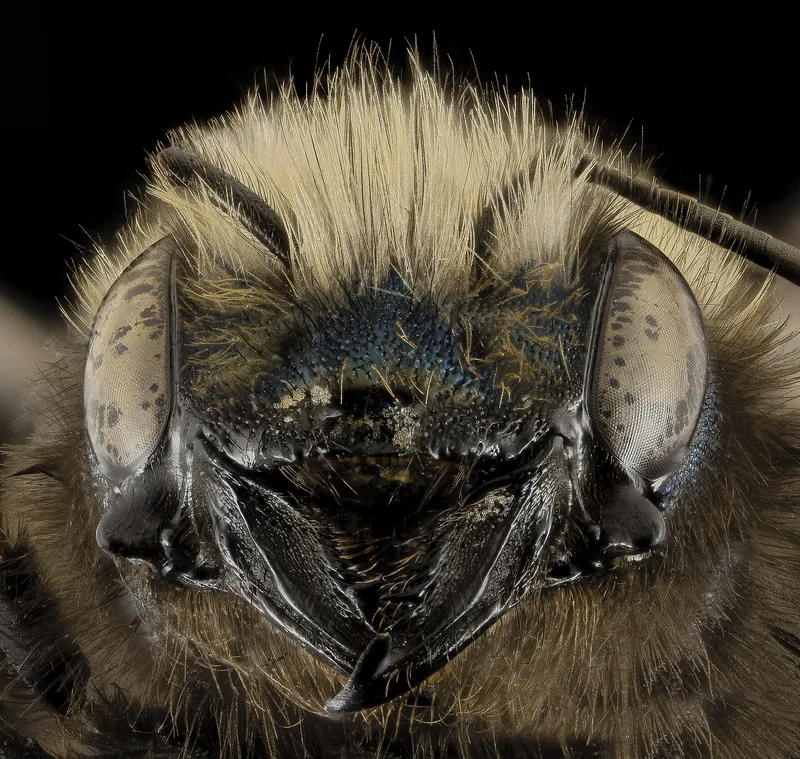
Over 90% of bee species, including mason bees, carpenter bees, leafcutter bees and sweat bees, are solitary. Wikipedia
Where they live
About 70% of native bees nest in the ground; most of the rest use tunnels in wood or stems. Xerces Society About 30% of North American native bees nest in old beetle tunnels in dead wood. Drilled nest blocks and logs can stand in for them. Xerces Society
Many solitary bees spend about 11 months as eggs, larvae and pupae in the nest; the flying adult stage lasts only about three to six weeks. Xerces Society
Meet the families
Mason bees. Mason bees nest in holes and hollow stems and build mud walls between their cells. Wikipedia Mason bees are docile and rarely sting, which makes them good garden pollinators. Wikipedia A single blue orchard bee female may make nearly 60,000 blossom visits in her life. Wikipedia
Leafcutter bees. Leafcutter bees line their nests with neat pieces they cut from leaves. Wikipedia
Plasterer bees. Plasterer bees (Colletes) line their underground nest cells with a waterproof, cellophane-like natural polyester. Wikipedia
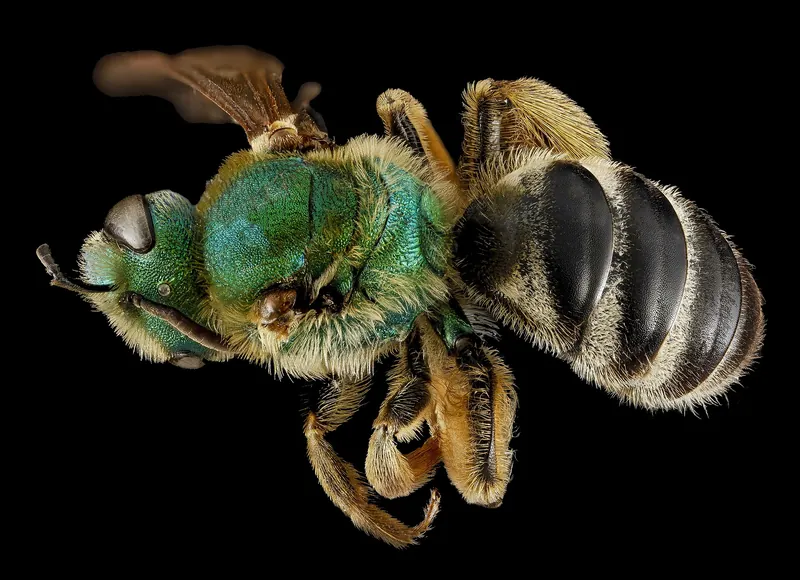
Sweat bees. Sweat bees are named because they like to drink salty perspiration. Xerces Society The most common bees in the Northern Hemisphere are the sweat bees (Halictidae), small and often mistaken for wasps or flies. Wikipedia The sweat bee genus Lasioglossum is the largest bee genus, with over 1,800 species. Wikipedia
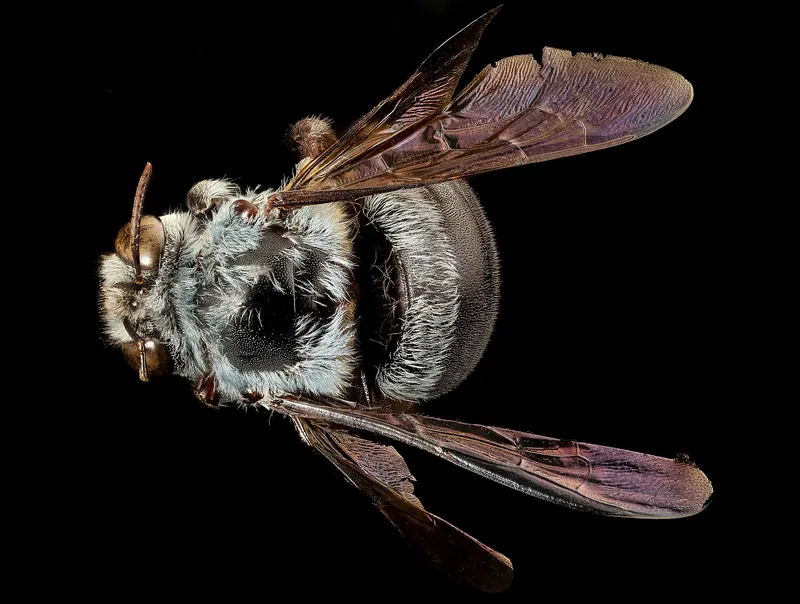
Carpenter bees. Carpenter bee males cannot sting (the sting is a modified egg-laying tube), though they will buzz close to people. Wikipedia
Cuckoo bees
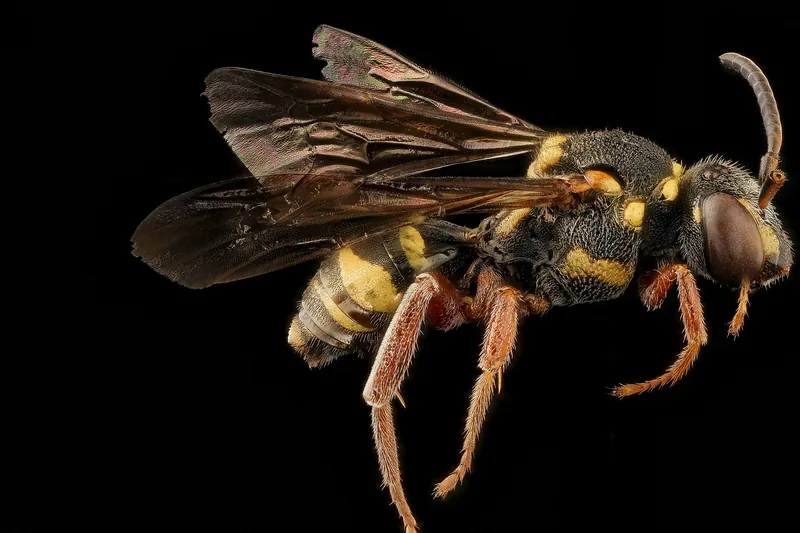
Cuckoo bees lay their eggs in other bees' nests, so their young eat the food another mother collected. Wikipedia Nomada, with over 850 species, is the largest genus of cuckoo bees. Many look surprisingly like wasps. Wikipedia
Records
Perdita minima is known as the world's smallest bee, at about 2 mm long. USGS Wallace's giant bee is the world's largest bee, with a wingspan of about 63.5 mm (2.5 in). Wikipedia
Still being discovered
About 10% of the bees in the United States have yet to be named or described. USGS