A bee-friendly garden
You don’t need a hive or a meadow. A window box, a scruffy corner and a bit less tidying all count.
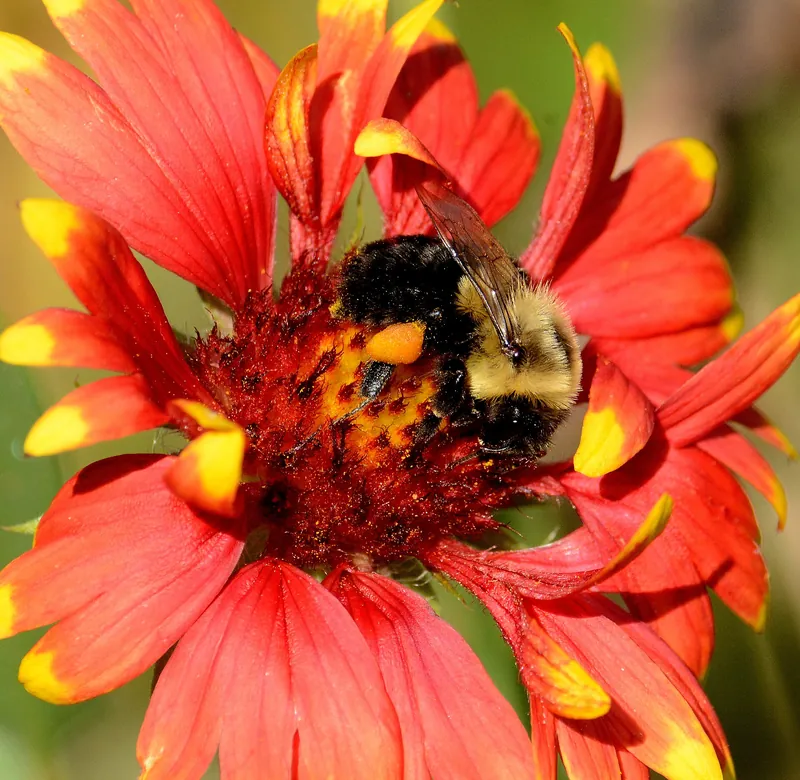
Plant flowers of different shapes
Bumblebees with long tongues prefer tubular flowers like foxgloves; short-tongued ones like the buff-tailed bumblebee use open flowers such as bramble. BBCT Bumblebee tongues vary from about 6 mm to over 20 mm. Long-tongued species like the garden bumblebee prefer deep tubular flowers such as foxgloves. BBCT Aim for something in flower from early spring to autumn.
Mow less
The UK has lost 97% of its wildflower meadows in the last century; habitat loss is the main driver of bumblebee declines. BBCT Leave a patch of lawn to grow long and flower. Dandelions and clover are food, not failure.
Leave some bare ground
Ground-nesting bees dig tunnels in bare or partly vegetated, well-drained soil, so sunny bare patches help them. Xerces Society About 70% of native bees nest in the ground; most of the rest use tunnels in wood or stems. Xerces Society
Leave the untidy bits
Queen bumblebees dig into soil, sometimes more than 10 cm deep, to hibernate. Log piles and undisturbed corners help them. BBCT Bumblebees don't live in hives. Some nest underground in old mouse holes, under sheds or in compost heaps; others in thick grass, bird boxes or lofts. BBCT
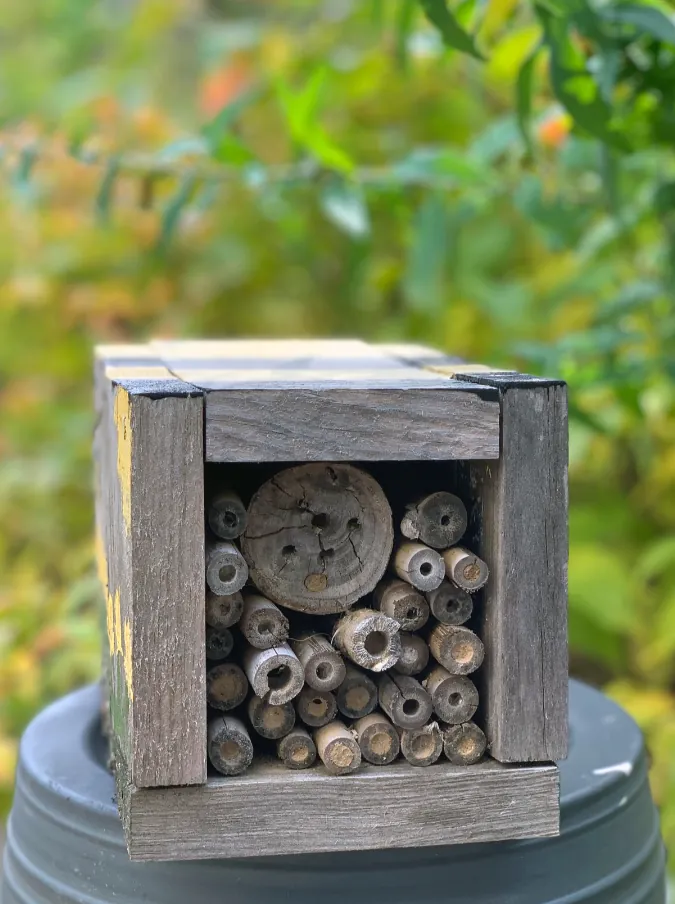
Put up a bee hotel
Insect hotels are used as nest sites by solitary bees and solitary wasps. Wikipedia About 30% of North American native bees nest in old beetle tunnels in dead wood. Drilled nest blocks and logs can stand in for them. Xerces Society Pick one with tubes you can take out and replace, and put it somewhere sunny and sheltered.
Go easy on pesticides
Bumblebee declines have been caused by habitat loss, the mechanisation of farming and pesticides. Wikipedia If you don’t need to spray, don’t.
Most garden bees are busy and uninterested in you. Watching from a step away is perfectly safe for most people. If you have a known allergy, read stings: basic safety.
Want to do more?
Join a citizen science count, such as the UK’s Pollinator Monitoring Scheme or a local bee survey, and support the Bumblebee Conservation Trust or the Xerces Society. Seeds, bee hotels and good books are on our kit page.